LD2410 : câblage ESP32, code et brochage
Présence humaineUART
Le LD2410 est un capteur radar à ondes millimétriques pour la détection de présence humaine, prenant en charge la détection de cibles fixes et mobiles.
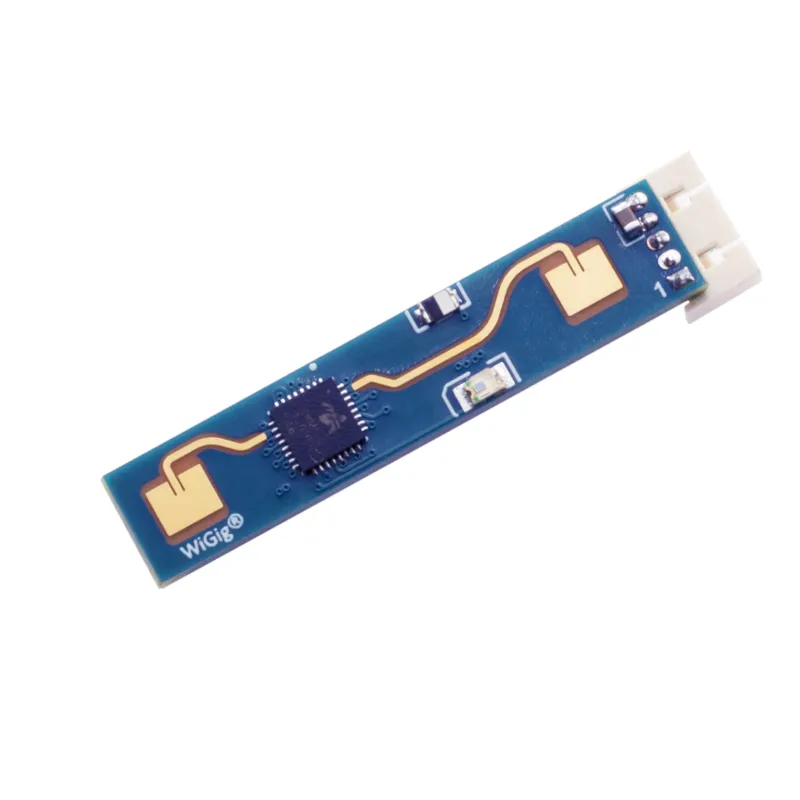
Démarrer
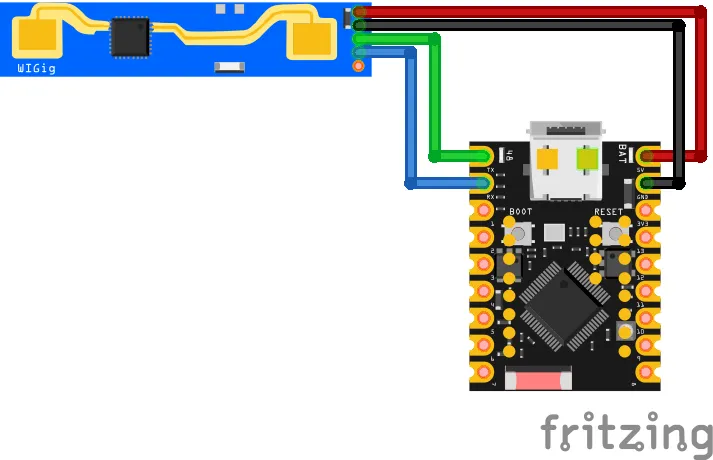
Câblage vers l’ESP32
| Broche du capteur | Broche ESP32 | Statut | Rôle |
|---|---|---|---|
| VCC | 5V | Requis | Alimentation (5V) |
| GND | GND | Requis | Sol |
| TX | GPIO16 (RX2) | Requis | Transmission du capteur à la réception ESP32 |
| RX | GPIO17 (TX2) | Requis | Le capteur reçoit de la transmission ESP32 |
| OUT | GPIO18 | Optionnel | Sortie de présence numérique (en option) |
Code
Bibliothèques à installer
- MyLD2410 · Iavor Veltchev
Depuis le gestionnaire de bibliothèques de l’IDE Arduino.
#if defined(ARDUINO_SAMD_NANO_33_IOT) || defined(ARDUINO_AVR_LEONARDO)
//ARDUINO_SAMD_NANO_33_IOT RX_PIN is D1, TX_PIN is D0
//ARDUINO_AVR_LEONARDO RX_PIN(RXI) is D0, TX_PIN(TXO) is D1
#define sensorSerial Serial1
#elif defined(ARDUINO_XIAO_ESP32C3) || defined(ARDUINO_XIAO_ESP32C6)
//RX_PIN is D7, TX_PIN is D6
#define sensorSerial Serial0
#elif defined(ESP32)
//Other ESP32 device - choose available GPIO pins
#define sensorSerial Serial1
#if defined(ARDUINO_ESP32S3_DEV)
#define RX_PIN 18
#define TX_PIN 17
#else
#define RX_PIN 16
#define TX_PIN 17
#endif
#else
#error "This sketch only works on ESP32, Arduino Nano 33IoT, and Arduino Leonardo (Pro-Micro)"
#endif

// User defines
// #define DEBUG_MODE
#define ENHANCED_MODE
#define SERIAL_BAUD_RATE 115200

//Change the communication baud rate here, if necessary
//#define LD2410_BAUD_RATE 256000
#include "MyLD2410.h"

#ifdef DEBUG_MODE
MyLD2410 sensor(sensorSerial, true);
#else
MyLD2410 sensor(sensorSerial);
#endif

unsigned long nextPrint = 0, printEvery = 1000;  // print every second

void printValue(const byte &val) {
  Serial.print(' ');
  Serial.print(val);
}

void printData() {
  Serial.print(sensor.statusString());
  if (sensor.presenceDetected()) {
    Serial.print(", distance: ");
    Serial.print(sensor.detectedDistance());
    Serial.print("cm");
  }
  Serial.println();
  if (sensor.movingTargetDetected()) {
    Serial.print(" MOVING    = ");
    Serial.print(sensor.movingTargetSignal());
    Serial.print("@");
    Serial.print(sensor.movingTargetDistance());
    Serial.print("cm ");
    if (sensor.inEnhancedMode()) {
      Serial.print("
 signals->[");
      sensor.getMovingSignals().forEach(printValue);
      Serial.print(" ] thresholds:[");
      sensor.getMovingThresholds().forEach(printValue);
      Serial.print(" ]");
    }
    Serial.println();
  }
  if (sensor.stationaryTargetDetected()) {
    Serial.print(" STATIONARY= ");
    Serial.print(sensor.stationaryTargetSignal());
    Serial.print("@");
    Serial.print(sensor.stationaryTargetDistance());
    Serial.print("cm ");
    if (sensor.inEnhancedMode()) {
      Serial.print("
 signals->[");
      sensor.getStationarySignals().forEach(printValue);
      Serial.print(" ] thresholds:[");
      sensor.getStationaryThresholds().forEach(printValue);
      Serial.print(" ]");
    }
    Serial.println();
  }

  if (sensor.inEnhancedMode() && (sensor.getFirmwareMajor() > 1)) {
    Serial.print("Light level: ");
    Serial.println(sensor.getLightLevel());
    Serial.print("Output level: ");
    Serial.println((sensor.getOutLevel()) ? "HIGH" : "LOW");
  }

  Serial.println();
}

void setup() {
  Serial.begin(SERIAL_BAUD_RATE);
#if defined(ARDUINO_XIAO_ESP32C3) || defined(ARDUINO_XIAO_ESP32C6) || defined(ARDUINO_SAMD_NANO_33_IOT) || defined(ARDUINO_AVR_LEONARDO)
  sensorSerial.begin(LD2410_BAUD_RATE);
#else
  sensorSerial.begin(LD2410_BAUD_RATE, SERIAL_8N1, RX_PIN, TX_PIN);
#endif
  delay(2000);
  Serial.println(__FILE__);
  if (!sensor.begin()) {
    Serial.println("Failed to communicate with the sensor.");
    while (true) {}
  }

#ifdef ENHANCED_MODE
  sensor.enhancedMode();
#else
  sensor.enhancedMode(false);
#endif

  delay(nextPrint);
}

void loop() {
  if ((sensor.check() == MyLD2410::Response::DATA) && (millis() > nextPrint)) {
    nextPrint = millis() + printEvery;
    printData();
  }
}
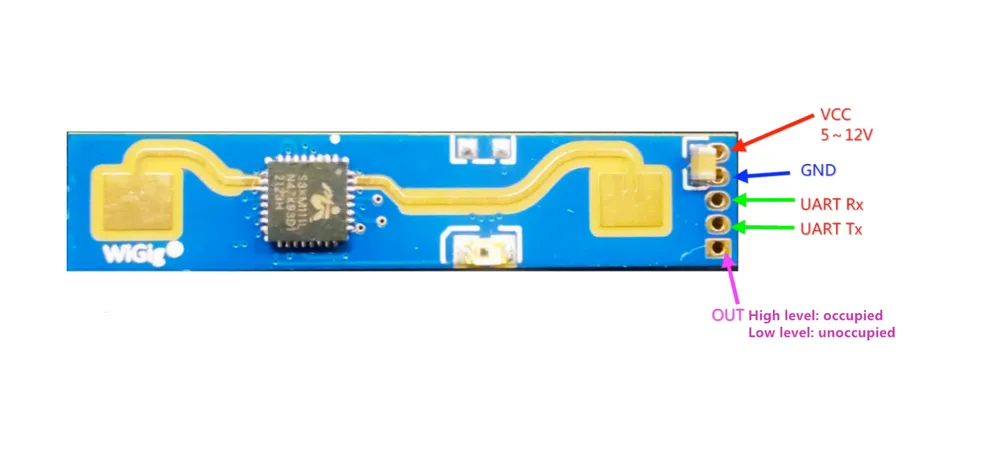
Brochage
| Broche | Type | Description |
|---|---|---|
| VCC | Power | Entrée d'alimentation5 V CC |
| GND | Power | Connexion à la terre |
| TX | Communication | Transmission UARTEnvoie les données du capteur (se connecte à l'ESP32 RX) |
| RX | Communication | Réception UARTReçoit les commandes (se connecte à ESP32 TX) |
| OUT | Communication | Sortie de présence numériqueÉLEVÉ lorsque présence détectée (facultatif) |
Caractéristiques
Le LD2410 est un capteur radar à ondes millimétriques pour la détection de présence humaine, prenant en charge la détection de cibles fixes et mobiles. Il utilise la communication UART et est idéal pour les systèmes domotiques intelligents.
| Caractéristique | Valeur |
|---|---|
| Output | UART, Optional GPIO |
| Interface | UART (256000 baud) |
| Pin Width | 1.27mm |
| Dimensions | 35mm × 7mm |
| Resolution | 0.2m or 0.75m gate intervals |
| Power Supply | 5V DC |
| Detection Field | ±60° |
| Detection Range | Up to 5 meters |
| Operating Temperature | -20°C to +85°C |